Showing posts with label producer. Show all posts

Thursday, March 14, 2013

The Producer: Kristoffer Møller @ Horn Cider

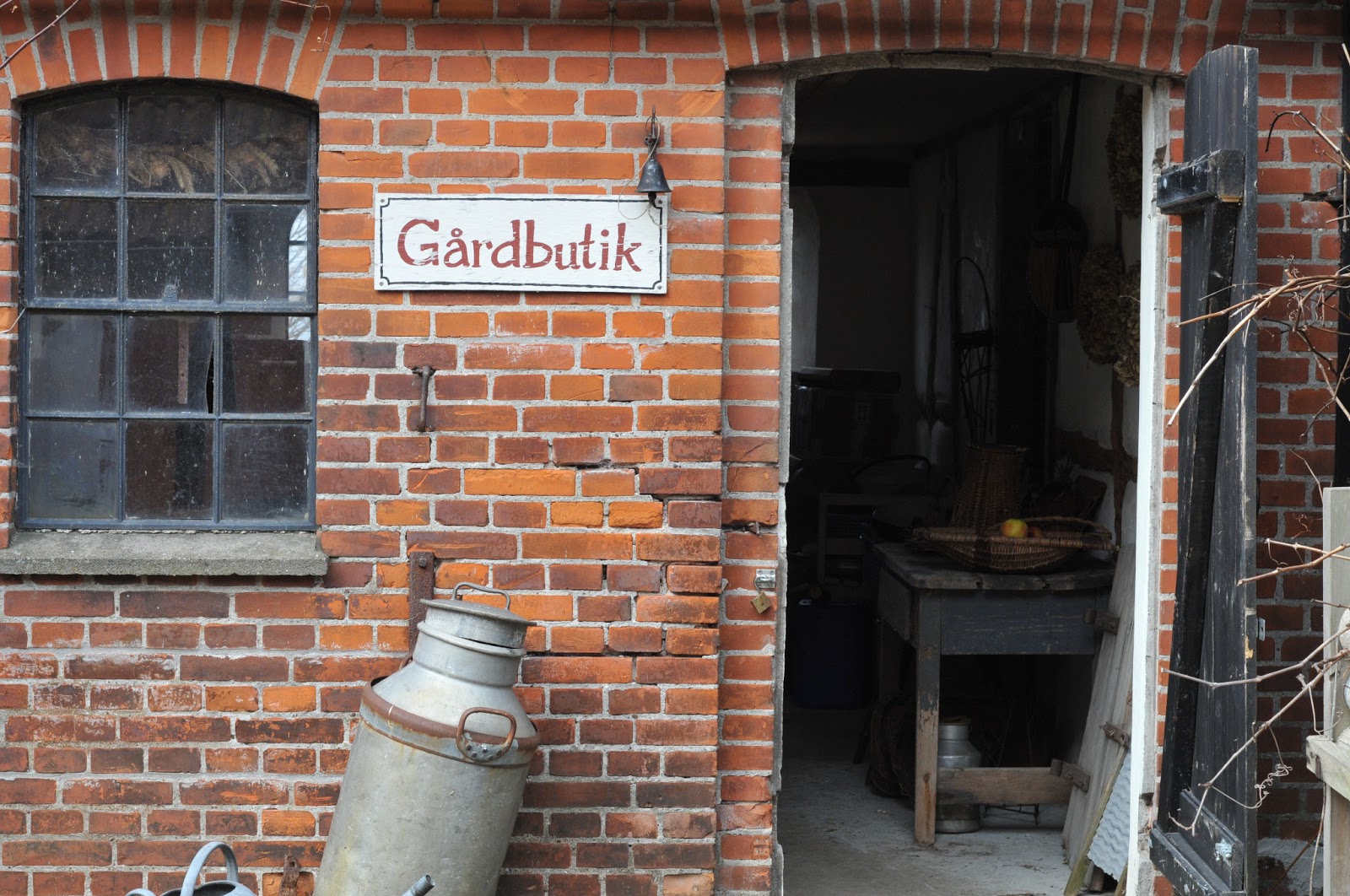
Horn Cider in central Jutland was the last stop on my way drive through Jutland. Horn Cider was founded by Kristoffer Møller in 2006 after he attended a how-to-do cider course at with Jens from Cold Hand Winery. Since then Kristoffers production has grown and today he sells all his ciders to restaurants and deli shops in Jutland.

Horn Cider produces two different ciders. One bottled with residual sugar and allowed to ferment and build up pressure in the bottle. So as known from traditional French cider. However Kristoffer uses Danish apples. The other cider is fermented to dryness, then bottled and added sugar and yeast and allowed to ferment for a second time in the bottles. Both ciders are riddled and disgorged.

What make Kristoffers ciders special is that he use honey instead of yeast for inoculation. Kristoffer told me that he was working together with some scientists to figure out what yeasts the honey introduced and what happened during the fermentation. I’m really looking forward to hear more about these results…


Monday, March 4, 2013

The Producer: Sven Moesgaard @ Skærsøgaard Vin

Last week I went on a road trip to visit Danish cider / apple wine producers in Jutland. The first stop on my way was Skærsøgaard Vin. The winery is located only a short drive from Kolding. This is the closet you get to a “real” wine estate in Denmark. 15.000 wine plants and a winery packed with the newest equipment. There is no doubt that Sven – the founder and owner – is passionate about this project. Svens place is like heaven for a real wine geek.

I stopped by Skærsøgaard for a talk on apple wine, as Sven do Danish cider on Danish apple varieties. However cider is not his only product. His portfolio counts a broad selection of red and white wines, sparkling wines, fortified wines and distilled and aged spirits.

Sven talked me through his production and thoughts on cider as we walked through his fascinating winery.


Sven do two different wines on apples. However the only thing that differentiates the two wines from each other is the dosage, where he use either his fortified apple wine (æbleau) or his fortified black currant wine (crème). The production of the wine is as close to the traditional way of making Champagne as we get. Must of Danish apples are fermented to total dryness using Saccharomyces bayanus, allowed to stabilize and clarify for rather long time at low temperature, bottled with sugar, nutrients and Saccharomyces bayanus and allowed to ferment and mature in bottle. The wine is then riddled, disgorged and added dosage. This gives a sparkling, light aromatic apple wine. And I really like it!


No doubt that Svens passion is more than a hobby. I had a great time visiting the winery, tasting the wines and disusing interesting aspects on Danish cider.

Monday, February 25, 2013

The Producer: Kim Johansen @ Pomona

I met with Kim at his office located in historical surroundings at the old Carlsberg area here in Copenhagen. Until 2008 millions of beers was brewed here every year. The location is no coincides, cause Kim knows beer. As a teacher at the Scandinavian School of Brewing is teach the magical processes of brewing.

Beside his profession as teacher Kim brew cider on license. Why do a man with so much knowledge in beer brew cider?

Kim was inspired to do cider after a trip to Somerset in England. After some years as garage brewer Kim teamed up with a big apple must factory to do cider.  In 2002 he launched his first cider named Pomona.

Kim way of making cider is far away from what’s seen elsewhere. The apples come from orchards around Fyn and from locals garden (they trade 4 kg of apples for 1 liter of must). After pressing the must is pasteurized. Sugar is added to the must together with a secret yeast strain that Kim chose himself. After fermentation Kim added lactic acid bacteria that convert the sharp malic acid into the weaker acid lactic acid. Kim does this to give his cider a more pleasant acidity. Finally unfermented pasteurized apple must is added to the cider and it is then filtered, added carbon dioxide, bottled and pasteurized.

Kims way of making cider is quite unique and very different from the French approach that most of the Danish brewers follows.

Read more about Pomona cider @ http://www.pomona.dk/English.htm

Some years ago Kim did an article on how to brew cider after a field trip around Europe. Download it here for free.

Thursday, February 21, 2013

The Producer: Kai Winter @ Kernegaarden

I’ve mentioned Kai earlier on this blog. He was the first that introduced me to “real” cider. Since our first meeting Kai and I have done different project together and discussed the aspects of being a small producer in Denmark. Unfortunately we never discussed his cider production in details. So last week Kai came by Copenhagen for a talk about cider.

Mapping Kais cider production and tasting different ciders.

Here are some of my notes from the meeting.

Kai started producing cider at Fejø in collaboration with some other guys, including Jeppe from Fejø Cider (read more about Jeppe here). Today Kai operate on his own from his small farm Kernegaarden.

His approach to cider is French. The cider is produced from French cider apple varieties that grow in small orchards around the island. Kai buy the apples from the growers and produce cider from these. Kai produce two different ciders, a traditional semi dry cider and “summer cider”.

The production the traditional semi dry cider is very simple and as natural as possible: The apples are matured in plastic nets, then milled, pressed and clarified by Keeving. The cider is racked and allowed to ferment spontaneously for up to 3 months at low temperature. The cider is then filtered, bottled and matured for 2-3 months before sale. This gives a rich and aromatic Danish-French cider.

The “summer cider” varies from the traditional in the duration of fermentation. The summer cider is allowed to ferment longer. After the fermentation the cider is filtered, bottled and added carbon dioxide and is then pasteurized.

I went to visit Kernegaarden a couple of times. Here are some of my shoots from the visit.

Kai in a talk @ Torvehallerne, Copenhagen

Maturation of cider apples

The shop @ Kernegaarden, Fejø

Wooden barrels outside the winery


Monday, February 11, 2013

The Producer: Jeppe Gents @ Fejø Cider

Last week I met with Jeppe for coffee (cortado for Jeppe and a large americano for me) for a talk about his cider production at Fejø. Jeppe was very interested in my project on Danish cider – but laughed a bit about my approach. As Jeppe said “what you are doing is apple wine – not cider” and I guess apple wine is bad when comparison.

Here are some notes from the meeting.

Jeppe and his wife (the manager of the firm) was some of the first to produce cider here in Denmark. They used to have an apple orchard at Femø with Danish varieties but decided to plant a new orchard with cider apple trees on Fejø. Femø and Fejø are both small islands in the southern part of Denmark – very close to each other.

What they planted was mainly French cider and juice varieties as Douce Moen, Douce Coet Ligne, Avrolles, Kermerrien, Bedan, Bisquet, Friquin rouge, Judeline and Judaine.

Fejø cider is a natural cider. Organic grown apples. No additives. No sulfur. No yeast. No nothing – just pure cider apples grown in Danish soil.

Fejø cider is French cider in Denmark. A rich and balanced cider. Golden and very drinkable. Jeppe emphasized vintage 2011 as one of the best!

All work takes place at Fejø. The apples are harvested in the beginning of November, matured in big wooden boxes until milling and pressing. Jeppe don’t do maceration. The must is allowed to form brown hat and is then racked and fermented at low temperature in big plastic boxes and stainless steel tanks for up to three months. The cider is then filtered (not always), bottled and matured.

Jeppes cider sells on restaurants and bars around Denmark and at Systembolaget in Sweden – and I think Jeppe said Norway as well. Try it.

Sorry – but no pics yet. See and read more @ www.fejoecider.dk (in Danish).