Showing posts with label kernegaarden. Show all posts

Thursday, February 21, 2013

The Producer: Kai Winter @ Kernegaarden

I’ve mentioned Kai earlier on this blog. He was the first that introduced me to “real” cider. Since our first meeting Kai and I have done different project together and discussed the aspects of being a small producer in Denmark. Unfortunately we never discussed his cider production in details. So last week Kai came by Copenhagen for a talk about cider.

Mapping Kais cider production and tasting different ciders.

Here are some of my notes from the meeting.

Kai started producing cider at Fejø in collaboration with some other guys, including Jeppe from Fejø Cider (read more about Jeppe here). Today Kai operate on his own from his small farm Kernegaarden.

His approach to cider is French. The cider is produced from French cider apple varieties that grow in small orchards around the island. Kai buy the apples from the growers and produce cider from these. Kai produce two different ciders, a traditional semi dry cider and “summer cider”.

The production the traditional semi dry cider is very simple and as natural as possible: The apples are matured in plastic nets, then milled, pressed and clarified by Keeving. The cider is racked and allowed to ferment spontaneously for up to 3 months at low temperature. The cider is then filtered, bottled and matured for 2-3 months before sale. This gives a rich and aromatic Danish-French cider.

The “summer cider” varies from the traditional in the duration of fermentation. The summer cider is allowed to ferment longer. After the fermentation the cider is filtered, bottled and added carbon dioxide and is then pasteurized.

I went to visit Kernegaarden a couple of times. Here are some of my shoots from the visit.

Kai in a talk @ Torvehallerne, Copenhagen

Maturation of cider apples

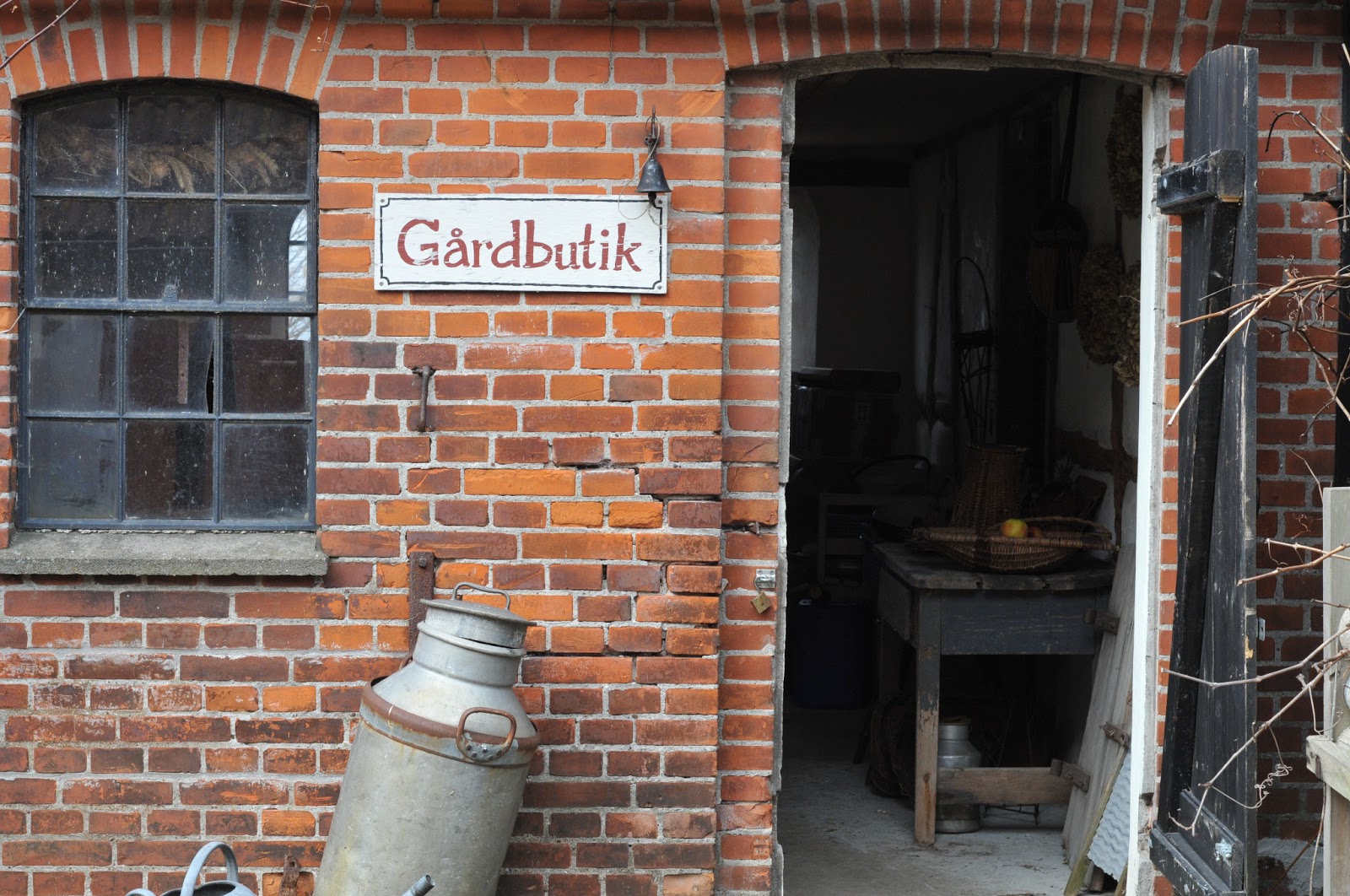
The shop @ Kernegaarden, Fejø

Wooden barrels outside the winery


Friday, February 1, 2013

Step 5: Maceration

Maceration of pulp at 15 C

The milling process break down the apple into small pieces and enhance the surface area. The interior of fruity flesh is now exposed to the real world consisting of potent reactants as oxygen and light. Enzymatic reactions as browning and other oxidative processes will now take place – and this happens fast. The process where apple pulp is left over time in contact with oxygen is called maceration.

I asked my good old friend Kai what he does in his production at Kernegaarden. Kai mill the apples and leave them for a couple of hours before pressing. According to my good old book “The Principles and Practice of Cider-Making” the maceration should last for 24 hours. So what to do?

I guess the maceration process is about extraction of aroma compounds and pectin. Pectin is important in the traditional cider making process as this, in the presence of calcium ions, form a jellylike network (the brown hat) wherein important nutrients are entrapped. As nutrients are removed from the must yeast are not able to metabolize all the sugar and this result in a cider with a natural sugar content.

For my experiments I decided to macerate for 24 hours. To the modern ciders I added pectinolytic enzymes (polygalacturonases and pectine methyl esterases). This enhances the extraction of juice and nutrients as well as breaking down the pectin. Do to this the modern ciders are not able to form a hat and the must will therefore ferment to dryness.

Friday, January 4, 2013

A Different Approach to Cider

I’m not the first to work with cider in Denmark. Great and experienced brewers as Kai Winter from Kernegaarden, Jeppe Gents from Fejø Cider and Per Kølster were there before me. What these guys do is French cider in Denmark. They have planted orchards of French and English apple varieties on their farms. To be honest – and I’m sorry – this does not make sense in a country with such a diverse and rich supply of apples. Denmark is full of apples native to this country.


I believe in a different approach: Danish cider on Danish apple varieties. So is this new? Yes and no. No because Kim Johansen from Pomona Cider and Jens Skovgaard from Cold Hand Winery already do cider on Danish varieties. Yes because no one has ever launched a single variety cider on Danish apples. Maybe it taste like something not to be sold? I don’t know. But think about it for a while: a single variety cider on known varieties as Dronning Louise, Ildrød Pigoen, Ingrid Marie and so on. I think there is a huge and untapped potential here.

So I have set out to investigate the potential in single variety Danish cider. Therefore I have designed an experiment investigating different production methods and techniques as well as apple varieties.

Stay tuned for descriptions and results.

Friday, December 14, 2012

A True Love Story

My first meeting with cider – real cider – was at a big fair for bulk-produced food. Among stacks of frozen junk food, in a hidden corner, I found Kai and his lovely wife Anita. They introduced me to their cider made on French apple varieties that Kai and Anita planted on their farm at Fejø back in 2003. My expectations were – to be honest – very low. Until this unforgettable moment my knowledge to cider was limited to the sweet nasty junk juice that are sold here in Denmark as cider. Kais cider opened my mind. This beautiful rich and aromatic drink amazed me. I was in love - not with Kai - but with his cider.

Cider has been on my mind ever since.

Apple Cider from Kernegaarden, Fejø